
Metal to Plastic Adhesives
Metal to Plastic Adhesives: A Practical Guide to Bonding and Surface Preparation
Table of Contents
- Why Bonding Metal to Plastic Is Challenging
- Types of Metal to Plastic Adhesives
- How to Choose an Adhesive
- Surface Preparation
- FAQs
- Recommended Adhesives
- Recommended Collections
Bonding metal to plastic is a common example of dissimilar materials bonding in manufacturing and product assembly. It is often seen when bonding plastic components to a metal frame of a structure. Instead of using mechanical fasteners, some manufacturers choose adhesives for metal-to-plastic bonding to distribute stress evenly, reduce weight, and eliminate the need for drilling into the substrates. Regardless of the exact application, there is a need for strong, durable, and efficient bonding solutions.
Why Bonding Metal to Plastic Is Challenging
Dissimilar materials bonding refers to joining two substrates with different physical and chemical properties. These differences create stress at the bond line, especially when assemblies experience vibration, impact, or temperature changes. To combat these differences, the adhesive must bond well to both materials while also accommodating the performance requirements of the bond.
Bonding metal to plastic tends to be more challenging than bonding like materials. There are additional considerations that you need to take into account and accommodate.
Surface Energy Differences
Metals typically have a high surface energy that allows adhesives to wet out the surface and bond easily to them. Plastics such as ABS, PVC, and polycarbonate are also generally easier to bond. On the other hand, some plastics have low surface energy. Bonding polypropylene and polyethylene or PTFE, for example, is especially difficult without specialty chemistries or surface treatment.
Movement
Plastics are generally more flexible than metals, so bonded joints can experience stress when exposed to movement or vibration. Plastic components bonded to metal frames may also experience peel, shear, and impact forces simultaneously. Selecting an adhesive that can handle those combined stresses is critical.
Thermal Expansion Differences
Plastics expand and contract more than metals as temperatures change. Over time, cracking or delamination can occur if the adhesive cannot absorb that movement. Consequently, choosing an adhesive that balances strength with flexibility is critical.
Types of Metal to Plastic Adhesives
Different chemistries are commonly used as metal-to-plastic adhesives. Each has its strengths, limitations, and ideal use cases, so it is important to focus on which adhesive is the best fit for your specific application.
Some potential adhesives for structural bonding of plastic and metal include:
-
Methyl Methacrylate Adhesives (MMAs)
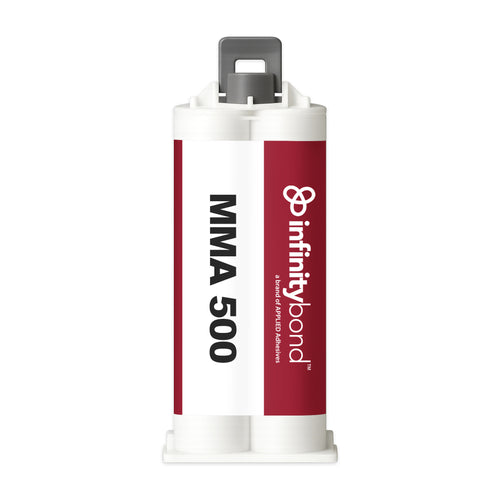
Structural acrylic and MMA adhesives are great for demanding dissimilar materials bonding. They offer strong bonds, good peel resistance, and better tolerance for thermal expansion differences between metal and plastic. MMAs are often used as a structural adhesive of choice for metal and plastic bonding because they typically require minimal surface preparation compared to other adhesives. There are also specialty formulations optimized for galvanized steel or low surface energy plastics. -
Epoxy Adhesives
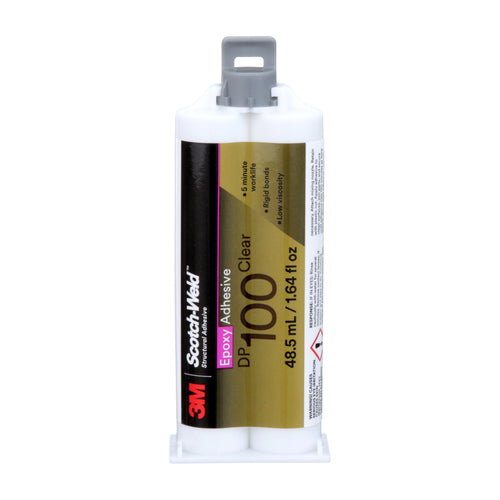
Epoxy adhesives provide extremely high strength, excellent chemical resistance, and good gap-filling capabilities. While boasting top shear strength, many standard epoxies are rigid and are not made for joints that experience a lot of vibration or movement. Epoxies also tend to require more extensive surface preparation than MMA adhesives. -
Two-Component Polyurethanes
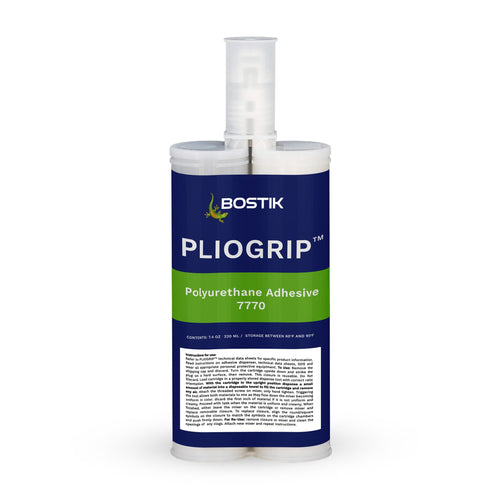
These adhesives are valued for their flexibility and strong adhesion to a range of substrates, including metals and certain plastics. They perform well in applications that require vibration resistance and environmental sealing. A downside is that they often require more thorough surface preparation than MMAs to achieve optimal bond strength. -
Structural Tapes
High-performance structural tapes offer an alternative to liquid adhesives. Instead of curing, they rely on pressure-sensitive adhesion and viscoelastic properties to create a durable bond. They are often used for panel bonding, trim attachment, and applications where appearance matters. Compared to liquid glue, tapes eliminate cure time and mixing, but they require proper surface cleaning to achieve full strength.
Other adhesives for plastic and metal for non-structural bonding include:
-
Cyanoacrylates
These adhesives cure quickly and work well for small, tight-fitting joints. They are best suited for light-duty assemblies and fast repairs. Some plastics, particularly low surface energy materials, may require a primer to improve adhesion. -
Polyurethane (PUR) Hot Melt Adhesives
PUR hot melt adhesives are applied as hot melts and then cure further through the moisture in the air. They provide fast initial green strength followed by improved long-term durability and heat resistance. These systems are often used in high-speed production environments. -
Thermoplastic Hot Melt Adhesives
Thermoplastic hot melts provide immediate handling strength once cooled. Heat and chemical resistance vary based on the specific hot melt formulation. These adhesives are well-suited for light- to medium-duty bonding where rapid processing is a priority.
How to Choose an Adhesive for Metal to Plastic Bonding
Every adhesive technology has different strengths and limitations. Some prioritize structural strength. Others are well-suited for impact resistance. Some provide fast cure times. Others focus on environmental resistance.
To get the best adhesive to bond metal to plastic, you need to focus on the requirements for your application. As experts in the adhesive industry for over 50 years, our team shares some insights into how to choose a metal and plastic bonding adhesive that is best for your needs.
When picking an adhesive, you should consider the following:
Specific Substrates
Start by confirming exactly what you are bonding. Different substrates have different adhesive requirements. Some substrates, such as galvanized steel, stainless steel, polypropylene, or polyethylene, may require more targeted adhesive formulations. Using a general-purpose product on a specialty substrate can lead to inconsistent adhesion or premature failure.
Required Bond Strength
Determine the bond strength you need. Structural bonding of metals and plastics demands high strength and long-term durability that you can often find with MMAs, epoxies, or two-part polyurethanes. Temporary or light-duty bonds may allow you to use cyanoacrylates or hot melts.
Flexibility Requirements
Consider how much movement the joint will experience. Plastic expands and contracts more than metal, and vibration is common in many assemblies. If the bonded parts will flex or see temperature swings, you may need a more flexible adhesive, such as an MMA, SMP, or polyurethane. Rigid systems like standard epoxies can perform well in static applications but may struggle when movement is involved.
Surface Preparation Requirements
Some adhesives demand extensive preparation. Others, such as many MMAs, often require only a clean surface. Ask yourself whether it is realistic to fully remove grease, oil, or mold release agents in your environment. If surface prep is difficult to control, choosing a technology that tolerates minimal preparation can improve consistency and reduce labor.
Processing Speeds
Fast-cycle production may require faster curing adhesives. If you need immediate handling strength, cyanoacrylates or hot melts may be an option. If you can allow longer cure times in exchange for higher performance, structural acrylics or epoxies may be better suited for your application.
Temperature, Chemical, and Environmental Exposure
Outdoor exposure, high humidity, chemical contact, or elevated temperatures will narrow your options. Make sure the adhesive’s performance range matches the real-world conditions the assembly will face. Environmental resistance is often just as important as initial bond strength.
Current Equipment or Capital Investment
Some technologies require more involved dispensing equipment. Others can be applied with minimal tooling. Before selecting an adhesive, confirm that your current equipment can support it or that you are willing to invest in new systems. The best adhesive on paper may not be the most practical option on your production floor.
When you take a closer look at these different bonding requirements, you can get a better handle on which adhesive you need and narrow down your choices. Of course, many adhesives overlap in their bonding capabilities, and the best choice will come down to a product’s unique specifications. Always review a product’s technical datasheet, or speak with an expert for guidance.
Surface Preparation for Plastic to Metal Adhesives
Surface preparation for metal-to-plastic bonding is an important step that may be overlooked, but doing so could be costly. Even the best adhesive may fail if proper surface preparation steps are ignored. Taking the time to prepare both substrates will lead to better results and long-term reliability.
It is important to note that different adhesive chemistries have different surface preparation requirements. MMAs, for example, have a higher tolerance for oil and contaminants on the substrate. On the other hand, epoxies often require more intensive surface preparation steps to ensure a lasting bond.
Always follow the adhesive manufacturer’s recommendations, but when you glue metal to plastic, surface preparation often involves:
1. Cleaning both surfaces
Oil, dust, and contaminants can often collect on metal or plastic. They can prevent adhesives from forming strong bonds, which may lead to adhesive failure. Use a suitable solvent or cleaner to remove the contaminants, and allow both surfaces to dry completely before proceeding.
MMAs are great because minimal surface prep is required. Usually, cleaning the substrates with an isopropyl alcohol (IPA) wipe is all that’s needed if there is concern about the surface of the substrates being dirty.
2. Abrading the surfaces
In some cases, such as with epoxies or one-component polyurethanes, surface preparation of metal and plastic may call for abrasion. This abrasion increases surface area and promotes mechanical bonding. Fine-grit sandpaper is often sufficient, but if it is a low surface energy plastic, corona, plasma, or flame treatment is usually required. Always clean the surface of debris left behind from abrasion.
3. Applying primers or activators if required
Some epoxies and one-component polyurethanes may require priming the surface before application. Follow manufacturer instructions carefully for coverage and drying time.
Applying the adhesive correctly is just as important as selecting it. Always follow manufacturer guidelines for surface preparation for best results and avoid handling the product until recommended.
Need a Recommendation?
Finding a good metal-to-plastic adhesive for your application can get complicated. Not only do you need to understand the ins and outs of your application, but also you need to match those requirements to an adhesive.
With so many different types of adhesives for metal to plastic and a lot of application requirements to meet, we want to help. Our team of adhesive experts can provide you with a personalized product recommendation to meet your needs. Contact us to get started.
Recommended Adhesives to Explore


Frequently Asked Questions
There is no singular best adhesive for plastic to metal. Epoxies, MMAs, VHB tapes, and one-component polyurethanes are all viable options for structural bonding applications. On the other hand, cyanoacrylates and hot melts can be a good choice for some non-structural applications.
Finding an adhesive to bond plastic to metal is challenging because of low-surface-energy substrates, thermal expansion differences, and movement. To avoid failure, you need to choose the right adhesive for the application, as well as perform proper surface preparation.
Yes. It is possible to bond low-surface-energy plastics to metal, but you often need specialty adhesives, more intensive surface preparation, or primers to get a lasting bond.
It depends on your needs, but adhesives distribute stress evenly, reduce weight, and eliminate the need for drilling, which can weaken plastic parts.
Yes. Certain MMA formulations are specifically designed to bond galvanized steel to plastics. Contact us for a product recommendation.
Ask a Question
Have questions? Our team of adhesive experts can help. Submit your questions and we'll get you answers right away. We're here to help.