
There are many different types of adhesives out there, and finding the right one for your needs can be challenging and even overwhelming. While both epoxy adhesives and methyl methacrylate adhesives (MMAs) are similar in their properties and applications, there are some important distinctions.
Fortunately, we are here to help clear up some of the confusion. Our team reviews the differences between epoxy and MMA adhesives, including their pros and cons, as well as which type of adhesive is best for your specific needs.
What Are Epoxies?
Epoxy adhesives are a type of structural adhesive usually made of epoxy resin and a curing agent like amine. There are two-component and sometimes one-component epoxies. When the epoxy comes in two components, the separate parts are mixed together before application. The result is a chemical reaction that leads to curing.
Epoxy adhesives are best known for their great tensile and shear strength. They also have high heat resistance and chemical resistance. As a result of their durability, they are frequently used for demanding applications.
What Are MMAs?

Methyl methacrylate adhesives (MMAs), also sometimes called acrylic adhesives, are a type of structural adhesive commonly known for their wide-ranging properties and limited surface preparation requirements. They are two-part adhesives that are mixed together before application and can act as a faster alternative to welding or rivets.
Unlike many other types of adhesives, MMAs require little surface preparation, so they can be applied to dirtier or oilier surfaces and still maintain a strong, lasting bond. They also do not need heat to cure. They are most commonly used in commercial and industrial applications.
What Are the Similarities & Differences Between Epoxy and MMA Adhesives?
While epoxy adhesives and MMA adhesives are comparable in many ways, they also have key differences that impact their performance and best use cases. Our team has created a chart below that outlines some of the most important similarities and differences between epoxy and methyl methacrylate adhesives.
| Feature | Epoxy Adhesives | MMA Adhesives |
|---|---|---|
| Composition | Two-part or sometimes one-part structural adhesives | Two-part structural adhesives |
| Bond Strength | Typically, the highest shear and tensile strength | High bond strength |
| Flexibility | Limited flexibility and elongation | Better flexibility |
| Chemical Resistance | High resistance | Good resistance |
| Heat Resistance | High resistance | Good resistance |
| Cure Time | Typically longer cure times | Typically faster cure times |
| Surface Preparation | Requires thorough surface preparation and cleaning | Minimal surface preparation required, can still bond to oily/dirty surfaces |
Composition
Perhaps one of the biggest differences between epoxies and MMA adhesives is their composition. MMA adhesives are two-component adhesives made of acrylic resin, a hardener, rubber, and other strengthening agents. In contrast, epoxy adhesives are typically two-component adhesives but can also come in one-component formulations. They are primarily made of epoxy resin and a curing agent.
Strength
Structural adhesives, MMA adhesives and epoxy adhesives can form permanent, load-bearing bonds. While they can both be used in applications with high-strength requirements, epoxy adhesives generally achieve higher tensile and shear strengths than MMA adhesives.
Flexibility
While epoxy adhesives are well known for their great strength, they can also be rigid and brittle with less tolerance for dynamic loads. On the other hand, MMA adhesives tend to be more flexible and better suited for applications exposed to vibration, impact, and thermal movement.
Chemical and Heat Resistance
Other differences between epoxy adhesives and methyl methacrylate adhesives are their chemical and heat resistance. Compared to MMA adhesives, epoxy adhesives tend to have higher chemical and heat resistance. As a result, epoxies can generally be exposed to environments with harsher chemicals and higher temperatures than MMAs while still maintaining their bond strength.
Cure Time
Cure time is the amount of time it takes for an adhesive to reach maximum hardness. While there is a lot of overlap between the two adhesives and every product is unique, MMA adhesives tend to have shorter cure times than epoxy adhesives.
Surface Preparation
When comparing epoxy and MMA adhesives, it is also important to note the differences in their necessary surface preparation for adhesive bonding. While MMAs can be applied to oily or dirty surfaces without extensive cleaning beforehand, epoxy adhesives typically require more surface preparation. Without proper preparation, the epoxy's bond may not achieve full strength or could fail.
When to Use Epoxy Vs. MMA Adhesives

Because they are so versatile, both epoxy adhesives and MMA adhesives can be used for different structural bonding applications in numerous industries. Although their applications often overlap, they have distinct differences that can impact which adhesive is best for any given application.
Choose epoxy adhesives over MMA adhesives when:
- High shear strength or tensile strength is your top priority
- You have an application that requires high chemical and heat resistance
- Your application does not require much flexibility
- You are okay with a longer cure time if it means a stronger bond
Choose MMA adhesives over epoxy adhesives when:
- You are looking for a shorter cure time for faster production
- You are bonding substrates that may be hard to clean, and you need more forgiving surface preparation requirements
- You require an adhesive with more flexibility or impact resistance for your application
Product Examples
Not only are epoxy and MMA structural adhesives different from each other, but the products within these groups can vary greatly. Even if you think you know which type of adhesive you need, narrowing it down to a specific product can be a challenge. To help, our team is sharing a few great examples that may be a good option for your application.
Epoxies
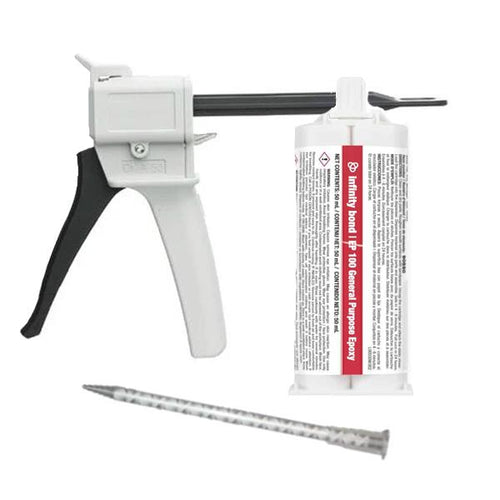
- EP 100 – If you are looking for a general-purpose epoxy that can be used in numerous applications, this adhesive may be for you. It can bond metals, plastics, ceramics, wood, glass, and more. It also has high chemical and weather resistance for demanding bonding environments.
- EP 420 – For especially demanding applications, this toughened epoxy adhesive is a great choice. It is designed to bond dissimilar materials like metals, composites, wood, and plastics. It also has a slower set time to allow for adjustments during production.
MMA Adhesives
- MMA 300 – An all-purpose MMA, this product can bond metals, plastics, and composites. It has a high chemical resistance, cold resistance, heat resistance, impact resistance, and weather resistance, so it is a great choice for many demanding applications.
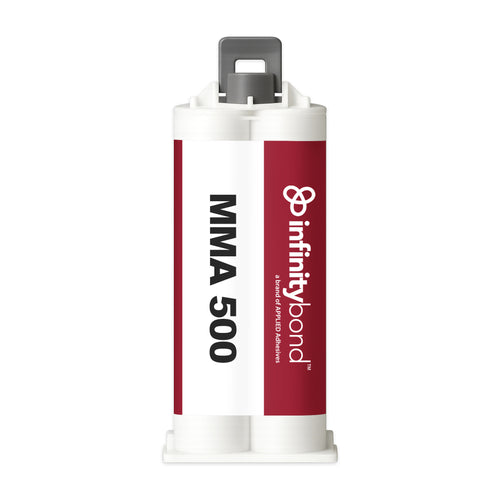
- MMA 500 – This product is special because it has the unique feature of bonding difficult plastics like polyethylene (PE) and polypropylene (PP). It has an open time of about four to five minutes and comes in various cartridge sizes.
Remember, applications are unique, so it is important to do your research when choosing an adhesive or speak with an adhesive expert for assistance. You should also test the product before rolling it out to your entire product line.
Ready to Choose?
Now that you have more understanding of the differences between epoxy adhesives and MMA adhesives, you should have a better idea of which one is right for you based on your needs. If you need more assistance, we are here to help. Contact one of our experts, and they will work with you to determine the best product for your specific needs.