
Table of Contents
- About Sikaflex 221
- About Sikaflex 291
- What Is the Difference?
- Choosing Between Sikaflex 221 and Sikaflex 291
- FAQs
Choosing the right adhesive sealant is essential to your product’s overall performance. While many sealants offer comparable specifications and capabilities, the differences can have a significant impact on how well they perform in your particular application.
Our team reviews the similarities and differences between Sikaflex® 221 and Sikaflex® 291, including their performance capabilities and ideal use cases to assist you in your selection process.
About Sikaflex 221
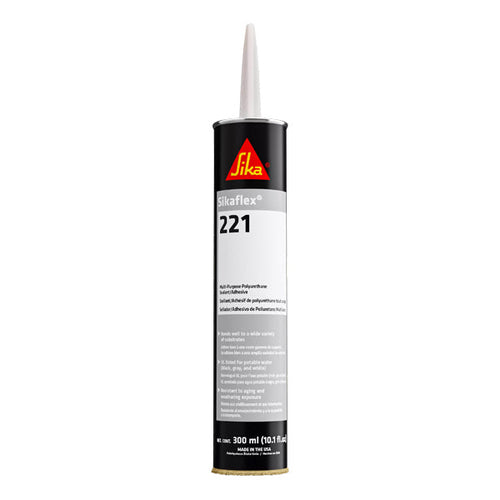
The Sikaflex 221 polyurethane adhesive sealant is a one-component product that makes permanent elastic seals and is designed for various general-purpose applications. Compatible with metals, plastics, ceramics, metal primers, and paint coatings, it offers versatile bonding opportunities.
The Sika Sikaflex 221 sealant is also non-corrosive, low odor, and resistant to aging for long-term durability. Ideal use cases for Sikaflex 221 include internal sealing and simple bonding applications.
About Sikaflex 291
The Sikaflex 291 adhesive sealant is a one-component polyurethane designed specifically for marine applications. Sikaflex 291 cures when exposed to moisture and bonds well to metals, woods, plastics, ceramics, metal primers, and paint coatings. It offers good aging and weathering resistance for marine environments.
The Sika Sikaflex 291 marine sealant can be used for interior sealing applications throughout the marine industry, including elastic, vibration-resistant joint seals. The sealant is also low odor and non-corrosive.
What Is the Difference Between Sikaflex 221 and 291?
Although both products are multi-purpose adhesive sealants, each offers distinct benefits and limitations that make it better suited to certain applications. Understanding the key similarities and differences between the Sikaflex 221 adhesive sealant and the Sikaflex 291 adhesive sealant can help you determine which product is best for your application.
| Properties | Sikaflex 221 | Sikaflex 291 |
|---|---|---|
| Base | One-component polyurethane | One-component polyurethane |
| Application temperature | 41–104°F (5–40°C) | 41–104°F (5–40°C) |
| Resistance | Resistant to aging | Resistant to aging and weather, making it better suited for marine environments |
| Skin time (CQP019-1) | 60 minutes | 60 minutes |
| Open time (CQP526-1) | 45 minutes | 45 minutes |
| Non-corrosive | Yes | Yes |
| Non-sag properties | Good | Good |
| Finishing | Can be sanded and painted | Can be sanded and painted |
| Certifications | NSF/ANSI/CAN 61 ─ Drinking Water System Components and NSF ─ Proprietary Substances and Nonfood Compounds | NSF ─ Proprietary Substances and Nonfood Compounds |
Choosing Between Sikaflex 221 and Sikaflex 291
When deciding between the Sikaflex 221 polyurethane sealant and the Sikaflex 291 marine sealant, it is critical to consider the needs of your specific application and how they align with each product’s specifications. While both are general-purpose adhesive sealants, you want to ensure that the product you choose will get you the best results.
Choose Sikaflex 221 over 291 when:
- The application is industrial rather than marine
- Drinking water certifications are required
If your application involves general industrial manufacturing or assembly, Sikaflex 221 typically provides the versatility and performance needed for reliable long-term sealing and bonding. Common uses of Sikaflex 221 include truck and trailer manufacturing, industrial equipment assembly, HVAC fabrication, agricultural equipment, and construction projects.
Choose Sikaflex 291 over 221 when:
- The application is in a marine environment
- Long-term weather exposure is expected
If your application involves exposure to marine conditions, Sikaflex®-291 is generally the more suitable solution due to its enhanced resistance characteristics. Common uses of Sikaflex 291 include interior marine sealing applications, vibration-resistant joint sealing, and general marine maintenance or repair work.
Need More Help?
The Sikaflex 221 polyurethane sealant and the Sikaflex 291 marine adhesive sealant are just two of many versatile adhesive sealants that can be used for a number of different applications. To ensure you are making the right selection for your application, you can buy a sample of Sikaflex 221 or Sikaflex 291 to try for yourself, or you can reach out to our team for a customized product recommendation.