
Choosing the right adhesive is imperative for industrial applications. It can impact the performance of the final product as well as your business overall. Cyanoacrylate and epoxy adhesives are two common adhesives used in industrial settings, but they are designed for very different applications, and using the wrong one can lead to serious problems.
Our team compares cyanoacrylate glues versus epoxy adhesives, so you can make an informed decision about which one is best for your particular application.
What Are Cyanoacrylate Glues?
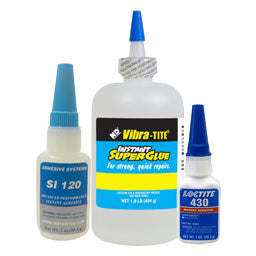
Cyanoacrylate glue, more commonly referred to as super glue, is a single-component adhesive that is best known for its almost immediate curing. Unlike many adhesives, cyanoacrylate adhesives also cure when exposed to moisture in the air. Together, these properties make cyanoacrylate glue great for quick fixturing and higher-speed production environments.
Compared to epoxy adhesives, cyanoacrylate adhesives are typically not intended for load-bearing applications. They are, however, commonly used for small parts assembly or quick fixes. While they offer significant speed benefits, there are some limitations related to environmental resistance, gap filling, and flexibility.
Key characteristics of cyanoacrylate glue:
- Extremely fast cure and fixture time
- Strong initial adhesion
- Minimal surface preparation required
- Limited flexibility
- Lower resistance to heat, moisture, and chemicals
What Are Epoxy Adhesives?
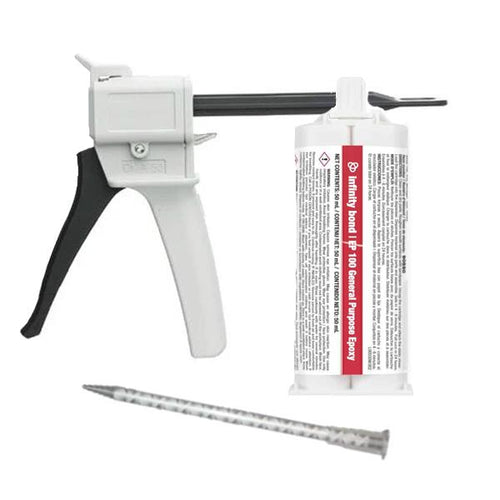
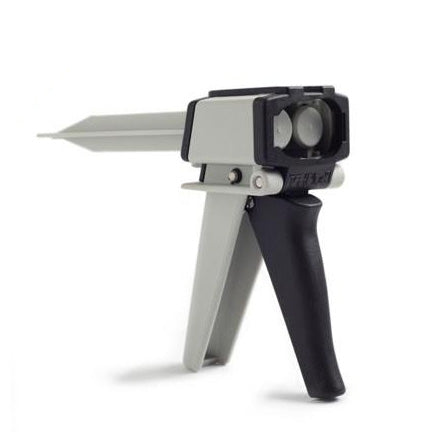
Epoxy adhesives can be one- or two-part adhesives. Two-component epoxy adhesives consist of a resin and a hardener that when mixed undergo a chemical reaction to create a strong load-bearing bond. Epoxies are known for their extremely high shear strength and long-lasting bonds. They also have a high resistance to heat and chemicals compared to cyanoacrylates and other structural adhesives. They are often a good choice for a lot of demanding environments.
Cure times for epoxy adhesives can vary from a few minutes to hours, depending on the formulation, but they can be well worth the wait when you require a strong and robust bond.
Key characteristics of epoxy adhesives:
- Extremely high structural and load-bearing strength
- Strong resistance to heat and chemicals
- Good gap-filling and non-sag properties
- Limited flexibility
- Surface preparation required
Similarities & Differences: Cyanoacrylates Vs. Epoxy Adhesives
Both cyanoacrylate adhesives and epoxy adhesives can bond well to different substrates, but they serve very different purposes. To avoid issues, especially bond failure, it is important to choose the right adhesives for your intended job.
To help, our team created a chart below that compares the similarities and differences between cyanoacrylate glue and epoxy adhesive.
| Property | Cyanoacrylate Glue | Epoxy Adhesive |
|---|---|---|
| Bond Strength | High initial strength | Very high shear strength |
| Heat Resistance | Limited | Great |
| Chemical Resistance | Fair | Excellent |
| Flexibility | Low | Limited |
| Gap Filling | Poor | Excellent |
| Cure Speed | Almost instantaneous | Minutes to hours |
| Surface Preparation | Minimal | More involved |
Of course, every product is different, and many adhesives can be specially formulated to better fit specific needs. Always check a product’s technical datasheet for its particular specifications.
How to Choose Between Cyanoacrylate and Epoxy Adhesives
Understanding the differences between cyanoacrylate versus epoxy adhesives is one thing, but knowing when to use each is even more important. Using the wrong adhesive can lead to wasted time and materials as well as faulty products and poor reviews. When deciding which adhesive you need, we suggest considering the factors below.
1. Shear Strength
Is your application load-bearing or a mission-critical assembly?
If the answer is yes, then an epoxy adhesive is the right choice. Epoxies are designed for durable and long-lasting structural bonds, whereas cyanoacrylates are more commonly used in small parts assembly.
2. Cure and Fixture Time
How fast do you need the bond to set? What are your cycle time requirements?
If you are looking for instant handling strength, cyanoacrylate glues offer almost immediate bonding and can fit well into faster production lines. On the other hand, epoxy adhesives take more time to cure but are necessary when shear strength is the priority.
3. Environmental Exposure
What type of environment will the bond face? Will the bond be regularly exposed to high heat or harsh chemicals?
For applications in more demanding environmental conditions, epoxy adhesives are usually the safer choice. They have an extremely high resistance to chemicals and a good resistance to heat. Cyanoacrylate adhesives can typically only tolerate moderate heat and chemical exposure.
4. Part Alignment
Do the parts fit tightly together? Are there any gaps to be filled?
When comparing epoxy adhesives and cyanoacrylate adhesives, it is also important to consider how the parts you are bonding fit together. For tight-fitting surfaces without any gaps, cyanoacrylates are fine. If there are gaps or uneven surfaces, an epoxy is more reliable.
By answering all these questions, you can confidently narrow down which chemistry better aligns with your application requirements.
When to Choose Cyanoacrylate Adhesives
In general, you should choose a cyanoacrylate adhesive over an epoxy adhesive when:
- Speed matters more than shear strength.
- The bond will not be exposed to high heat or chemicals.
- You need precision and tight bonding.
Cyanoacrylate adhesive applications commonly include small parts assembly or quick repairs. They are often used for electronic and medical device manufacturing.
Browse our collection of cyanoacrylate glues.
When to Choose Epoxy Adhesives
In general, you should choose an epoxy adhesive over a cyanoacrylate adhesive when:
- Shear strength is a priority, or you have a mission-critical bond.
- The bond will be exposed to high heat or chemicals.
- The bonding surface is uneven, or you need to fill gaps.
Compared to cyanoacrylate adhesives, epoxy adhesives are best for structural, load-bearing bonds. They can be ideal for electronic potting, automotive manufacturing, or construction applications.
Shop our wide selection of industrial epoxy adhesives.
Need a Better Fit?
While cyanoacrylate glues and epoxy adhesives can be a great choice for a lot of applications, they may not be the best choice for your specific needs. Whether you are looking for a more flexible option or another special property, we have a diverse collection of structural adhesives from numerous brands and with different formulations.
If you need help determining which product is right for you, you can also contact our team for a personalized product recommendation.