
Table of Contents
- What Is a Structural Adhesive?
- Steps to Choose a Structural Adhesive
- Determine the Structural Adhesive Chemistry
- Common Mistakes to Avoid
- FAQs
Structural adhesives obviously need to be strong, but that is just the start. There are other requirements they need to meet depending on the application. These adhesives also include a wide range of chemistries, brands, and properties. Consequently, choosing a structural adhesive for your particular needs can feel overwhelming.
In this guide, our adhesive experts will walk you through how to choose a structural adhesive step by step. By the end, you will know which questions to ask to narrow down your options to the right fit.
What Is a Structural Adhesive?
A structural adhesive is an adhesive that is used to create a load-bearing and permanent bond. They contribute to the mechanical integrity of the assembly and distribute mechanical loads across the bonded surfaces. Structural adhesives are commonly used in place of or in combination with mechanical fasteners as well as an alternative to welding. They are often a good choice for high-strength and durable bonding needs.
Structural adhesive glues include a diverse collection of adhesives with different chemical makeups and properties. Common chemistries of structural adhesives include:
Structural adhesives are widely used in transportation, construction, marine, and product assembly applications.
Steps to Determining Which Structural Adhesive You Need
Because there are a lot of structural glues to choose from, it helps to determine what type you need before focusing on individual products. We have worked in the structural adhesives industry for more than fifty years and regularly help manufacturers find the perfect adhesive for their needs.
To help you, we have outlined some of the key steps below on how to choose a structural adhesive. These steps should help you narrow down your options, so you are better able to find a reliable adhesive solution for your specific needs.
Step 1: Materials Being Bonded
The first step to picking a structural adhesive is understanding what substrates you are bonding. Some structural adhesives perform better with certain substrate materials.
Along with identifying the specific material, you should also consider whether the surfaces are bare, coated, painted, or oily. Some adhesives tolerate surface contamination better than others and require less surface preparation, such as MMAS. On the other hand, epoxies require thorough cleaning, abrasion, or priming to reach optimal bond strength.
Step 2: Joint Movement and Flexibility
Beyond reviewing your substrates, you also need to consider the flexibility requirements for your application. Many people get hung up on strength and ignore flexibility, but even the strongest adhesives can fail in applications that are under constant motion.
Is the assembly rigid? Will the joint be exposed to vibration, impact, or thermal cycling? In general, higher-strength structural adhesives tend to be more rigid, while more flexible adhesives typically have lower ultimate strength. For assemblies that move, flex, or vibrate, adhesives with more flexibility are usually required for better long-term performance.
Here is a quick breakdown of how flexible different structural adhesive chemistries generally are.
- Epoxies- strongest, rigid, least flexible
- MMAs- medium strength, medium flexibility
- Two-part polyurethanes- lower strength, higher flexibility
Although this is a general overview of the strength and flexibility of these adhesive chemistries, there can be overlap. Strength and flexibility are parameters that can be product-dependent.
Step 3: End-Use Requirements
Beyond looking at flexibility, you should also review the other end-use requirements for your bond. Is the bond made for indoor or outdoor use? What type of environmental conditions will it be exposed to?
Properties like chemical resistance, temperature resistance, and water resistance are all important factors that can impact which structural adhesives you should choose. Epoxies tend to have the highest chemical and temperature resistance of structural adhesives. On the other hand, two-component polyurethane structural adhesives tend to have lower resistance. Some structural glues also have special properties like UV resistance or food-safe standards to meet more specific application requirements.
Step 4: Open Time
You could have the strongest adhesive in the world, but it will not matter if your production process is not compatible with its application. You need to consider the structural adhesive glue’s open time. In other words, how long do you need between dispensing the adhesive and adhering it to the secondary surface?
Some adhesives have longer open times that are more compatible with larger bonding surface areas or applications where component adjustments are necessary. Other adhesives have short open times that are better for higher-speed production processes.
Step 4: Handling Time
Similar to the open time is the handling time. The handling time is the amount of time it takes for the adhesive to form a strong enough bond that it can be safely moved without the bond failing. In production, this sometimes breaks down to how quickly the bonded part can move on to the next step. For example, MMAs typically offer faster handling times than epoxies.
Step 5: Budget
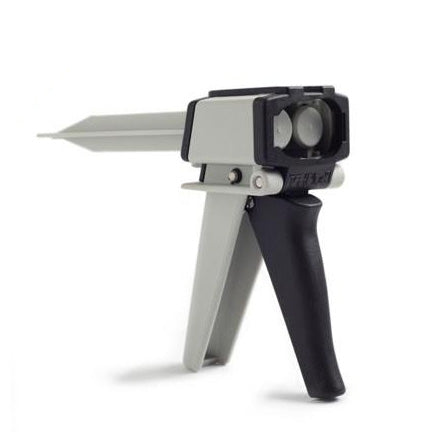
There are also multiple structural adhesives with overlapping properties and parameters from different brands. In this case, budget may be your deciding factor. You should consider not just the cost of the adhesive itself, but how it is packaged (bulk quantities tend to be cheaper) as well as the equipment needed to dispense the adhesive.
Determine the Structural Adhesive Chemistry You Need
When you evaluate all of these factors together, you can typically narrow your options to one or two adhesive chemistries. The table below shows how these structural adhesive families compare across the key considerations highlighted above.
| Adhesive Chemistry | Biggest Pros | Notable Cons | Ideal Uses |
|---|---|---|---|
| Epoxy | Very high strength, excellent chemical resistance | Rigid, low flexibility Surface preparation is required |
Rigid metal or composite assemblies, high-load applications with minimal movement |
| MMA (Acrylic) | Fast curing, minimal surface preparation | Odor, exotherm curing | Composite bonding, dissimilar materials, vibration and impact-prone assemblies |
| Two-Component Polyurethane | High flexibility, good fatigue resistance | Lower strength, moderate surface preparation | SMC bonding, automotive and marine parts, joints with movement |
While this chart can help you narrow down your choice to a structural adhesive chemistry, it is important to note that there can be a lot of overlap between these groups. You need to look at particular product specifications to make sure the adhesive you choose is compatible with your application.
Browse Our Collections:
Common Mistakes to Avoid When Choosing a Structural Adhesive
Choosing a structural adhesive glue is not just a one-factor decision. Our team frequently sees problems caused by:
- Selecting based on strength alone
- Ignoring joint movement and flexibility requirements
- Underestimating environmental exposure
- Choosing an adhesive that does not match your production process
- Skipping validation testing
If you make these mistakes in your choice of a structural glue, it could cost you a lot of wasted time, money, and material. If you have questions about your structural adhesive selection, you can also speak with one of our adhesive experts about your needs.
Get a Sample
Choosing the right structural adhesive is about asking the right questions and taking multiple factors into consideration. You can buy a sample from our large collection of structural adhesives glues to test them for yourself, or you can work with one of our team members and get a personalized product recommendation.