
Table of Contents
- Knottec 7713 Overview
- Tecbond 7718 Overview
- What's the Difference Between Knottec 7713 and Tecbond 7718?
- How to Choose
- FAQs
Both Knottec 7713 and Tec 7718 are polyamide hot melt adhesives from Power Adhesives designed for repair and filling applications. While they share a similar chemistry, they differ in other ways, including how and where they should be used. Understanding these differences can help you determine the right one for your application. Our team compares Knottec 7713 and Tec 7718 glue sticks so you can confidently select the best option for your needs.
Knottec 7713 Overview
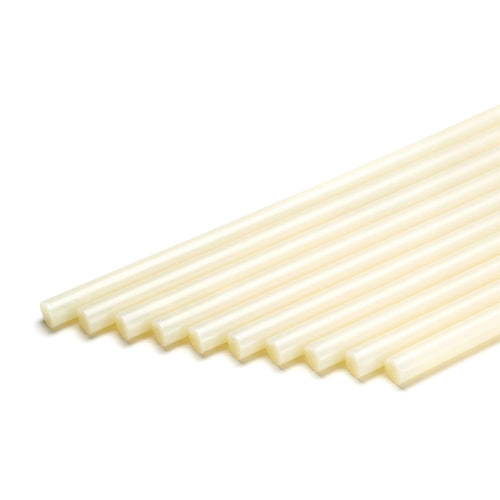
Power Adhesives Knottec 7713 is a polyamide hot melt adhesive formulated specifically for wood repair applications, including wood floors, furniture, and doors. It is an alternative to wood putties and epoxies and provides reliable adhesion with minimal surface preparation.
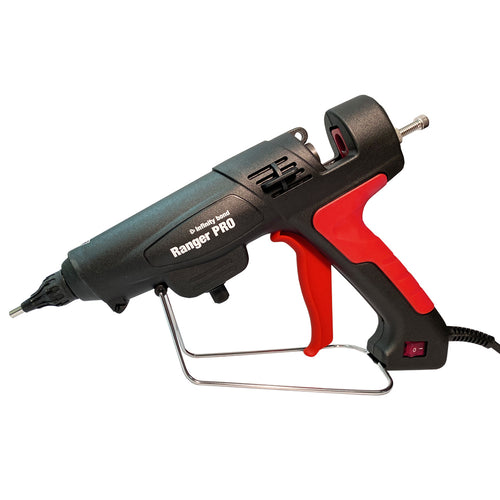
Knottec 7713 sets quickly with about a 20-second open time. The polyamide glue sticks also boast good chemical and temperature resistance that helps them withstand harsher environmental conditions. The Knottec 7713 polyamide glue comes in ½" (12 mm) glue sticks in numerous colors to match different wood finishes. It is compatible with high-temperature glue guns that take ½" glue sticks.
Tecbond 7718 Overview

Tecbond 7718 from Power Adhesives is a polyamide-based hot melt adhesive made primarily for potting and encapsulation in the electronics industry as well as wood repair applications. The adhesive has a very low viscosity for a better flow rate. It also has about a 20-second open time and sets hard in about 2 minutes for faster production speeds.
Being a polyamide glue stick, Tecbond 7718 has a good level of heat and chemical resistance compared to many standard hot melts. You can purchase the Tecbond 7718 polyamide glue in 1/2" (12 mm) sticks in amber, black, beige, cola, and oak. Tecbond 7718 glue sticks are applied with a high-temperature standard glue gun.
What's the Difference Between Knottec 7713 and Tecbond 7718?
While both adhesives are polyamide-based and can be used for some of the same applications, there are differences that can impact their performance. Our team created the chart below to showcase the similarities and differences between the Knottec 7713 and Tecbond 7718 polyamide glue sticks.
| Property | Knottec 7713 | Tecbond 7718 |
|---|---|---|
| Adhesive Chemistry | Polyamide hot melt | Polyamide hot melt |
| Form | 1/2-inch glue sticks | 1/2-inch glue sticks |
| Colors | Amber, black, beige, cola, cream, and oak | Amber, black, beige, cola, and oak |
| Open Time | 20 seconds | 20 seconds |
| Application Temperature | 356–419°F (180–215°C) | 356–419°F (180–215°C) |
| Viscosity | 5,000 cps at 374°F (190°C) | 1,000 cps at 374°F (190°C) |
| Heat Resistance | 221°F (105°C) | 239°F (115°C) |
| Low Temperature | 32°F (0°C) | 50°F (10°C) |
| Molten Tack | Medium | Medium |
Knottec 7713 was developed after the success of Power Adhesives Tecbond 7718. This hot melt sets quickly, is a little more brittle than Tecbond 7718, is easier to sand, and does not build up as fast on sanding belts. This is an excellent choice if you want to forgo the step of removing excess before sanding.
How to Choose Between Knottec 7713 and Tecbond 7718 Glue
While both adhesives are used for repair and filling, the Knottec 7713 polyamide glue sticks are better suited for applications where sanding and surface finishing are required, such as hardwood flooring and furniture repair. Tecbond 7718 glue, on the other hand, offers lower viscosity and higher heat resistance, making it more suitable for deeper fills and tougher repairs. Compared to Knottec 7713 glue sticks, Tecbond 7718 also has the added benefit of being suitable for electrical potting applications.
If you are deciding between these two adhesives for a wood repair application, we recommend walking through the decision step by step.
1. Decide if sanding and appearance matter.
If the repair will be visible and needs a smooth finish, the Knottec 7713 glue sticks are typically the better choice than Tecbond 7718.
2. Evaluate repair depth and flow needs.
For deeper cracks or voids, Tecbond 7718 has a much lower viscosity and therefore provides better penetration.
3. Consider temperature exposure.
Tecbond 7718 has a slightly higher heat resistance compared to Knottec 7713.
4. Determine durability requirements.
If maximum toughness and flexibility are priorities, Tecbond 7718 is usually the better choice.
Need More Help?
Choosing between Knottec 7713 and Tecbond 7718 ultimately depends on your application and the desired end result. You can buy both adhesives to sample and test on your substrates, or you can speak with one of our adhesive experts for more guidance.
We also offer a diverse selection of guns and hot melt glues for woodworking to explore.