
Wood to Plastic Adhesives
Table of Contents
- Challenges with Bonding Wood to Plastic
- Best Adhesive Types for Bonding Wood to Plastic
- How to Choose the Right Adhesive
- Surface Preparation
- FAQs
For any commercial bond, it is imperative that you use the right adhesive for the job. Bonding wood to plastic can be challenging because the two substrates behave very differently. Fortunately, our team is covering how to bond wood to plastic effectively as well as product recommendations for wood to plastic adhesives.
Challenges with Bonding Wood to Plastic
While wood and plastic bonds are commonly found in furniture, edge banding, window assemblies, insulated panels, signage, and more, they are not the easiest materials to glue together. The two substrates respond differently to moisture, heat, and stress and require different considerations for proper bonding.
Wood is a porous material that is naturally absorbent. Consequently, some adhesives cannot cure well to wood because of the natural moisture found inside. Wood also expands and contracts with humidity changes. This can be problematic for some adhesives because they form bonds that are too rigid to accommodate these flexibility requirements.
In some cases, plastics can also prove challenging to bond. Low surface energy plastics like polyethylene and polypropylene plastic prevent adhesives from wetting out and bonding to the surface. These plastics often require additional surface preparation or specialty adhesive products to get a proper bond.
When gluing wood to plastic, you need an adhesive chemistry that is compatible with both substrate materials and meets all the bond requirements.
Best Adhesive Types for Bonding Wood to Plastic
While not every type of adhesive is ideal for bonding plastic and wood, there are numerous, effective options. The best choice of adhesive for wood to plastic bonding will depend on factors like the open time, flexibility, handling strength, and environmental resistance needed.
SMPs and One-Component Polyurethanes
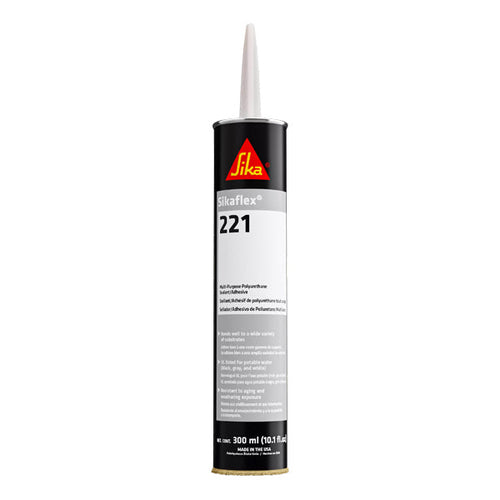
These adhesives are able to bond and seal with a high level of temperature and environmental resistance. They also tend to have a good amount of flexibility to account for the expansion and contraction of the wood. Typically with a long open time, these adhesives are great for use on large parts.
Hot Melt Thermoplastic Adhesives
Hot melt adhesives, including EVAs, APAOs, pressure sensitive adhesives, and polyamides, can all be used to bond plastic to wood. One of the biggest benefits of hot glues for plastic to wood bonding is that they tend to have a shorter open time and faster set time. This combination leads to immediate handling strength that can reduce clamp times and speed up production processes.
Different chemistries have different pros and cons. EVA hot melts, for instance, tend to be a cost-effective solution for general assembly uses. APAOs have better flexibility and heat resistance for more demanding bonding environments. Polyamides offer the highest temperature resistance when heat is a main point of concern. Finally, pressure sensitive adhesives are often used for temporary positioning and removable assemblies. Be sure you use the chemistry that is best for your specific application.
Polyurethane (PUR) Hot Melt Adhesives
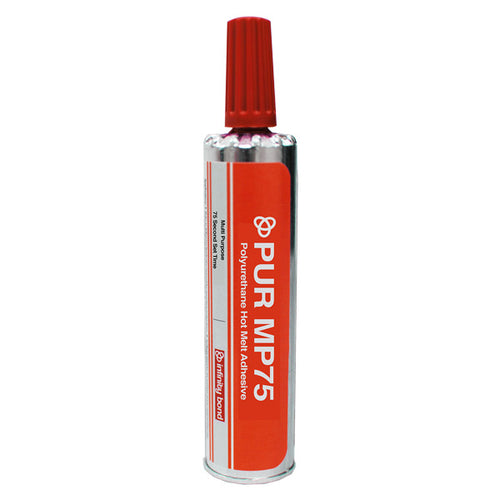
Another glue for wood to plastic bonding is PUR hot melts. These adhesives initially set like traditional hot melts, then continue to cure with exposure to moisture in the air or on the substrate to create more durable bonds. PURs are great because they combine flexibility and high green strength. They also tend to have great temperature resistance.
How to Choose the Right Plastic to Wood Adhesive
Selecting the right adhesive for plastic to wood bonding starts with understanding the full scope of your application needs. Some applications require great temperature resistance, while others prioritize speed. We generally recommend taking the following steps when choosing an adhesive for plastic to wood bonding.
Identify the specific substrates and design.
Different types of plastic and wood can behave in different ways and may require different adhesives or surface preparation. Especially if there are coatings or finishes on the surface, you need to account for that in your adhesive selection.
Think about the end use.
Temperature, moisture, movement, and UV exposure can all impact which plastic to wood adhesive you use. You will also need to consider if there are certain regulatory or certification requirements you need to meet.
Evaluate your production environment.
You should think about the storage and shipping conditions of the plant as well as what adhesive is most compatible with your production environment.
Consider the dispensing equipment.
It is not just about the adhesive; you need to think about the equipment used to dispense the adhesive and how it will fit into the production process and environment.
Look at the big picture when considering cost.
While the cost of the adhesive is one thing, you should look at the entire cost of using a particular adhesive. Equipment, maintenance, and efficiency can all impact your lifetime costs. While one adhesive may be a bigger initial investment, it may also have a better ROI.
Surface Preparation for Wood and Plastic Bonding
When it comes to gluing wood to plastic, even the best adhesive can fail if proper surface preparation is ignored. Surface preparation will vary depending on the adhesive as well as the particular types of wood and plastic being bonded. Always check with the adhesive manufacturer for specific instructions.
In general, wood substrates should be cleaned to remove dust, oil, wax, loose fibers, and other contaminants. This step may be done with a wipe, compressed air, or isopropyl alcohol depending on the wood. In some cases, light sanding is also recommended before bonding.
Plastics generally need to be cleaned and dried before bonding. Be sure to use a cleaner that is compatible with your particular type of plastic. If you are bonding a low surface energy plastic, specialty adhesives and corona or plasma treatment of the surface may be required. In some cases, primers and activators can also be used to promote adhesion on plastic substrates.
Get a Personalized Adhesive Recommendation
Selecting a wood to plastic adhesive requires more than just choosing a strong adhesive. SMPs, one-component polyurethanes, hot melts, and PURs all offer unique advantages, but the best adhesive to bond wood to plastic is dependent on several factors. To help you make the right choice, our team can provide you with a personalized product recommendation based on your specific application. Contact us to get started.
Related Products


Frequently Asked Questions
Bonding wood to plastic can be seen across a wide range of industries and applications, including:
- Furniture assembly
- Decorative laminate bonding
- Edge banding
- Window and door assemblies
- Signage manufacturing
- Sandwich panel construction
- Insulated panel production
- RV and trailer interiors
- Bracket and clip attachment systems
- Architectural panel fabrication
Traditional wood glue often does not bond well to plastics because plastics are typically non-porous and resistant to absorption. As a result, wood glue often creates weak bonds that can peel or fail under stress. For wood to plastic applications, we typically recommend SMP adhesives, one-component polyurethanes, or PUR adhesives. These adhesive chemistries provide better adhesion, flexibility, and environmental resistance when bonding porous wood surfaces to non-porous plastics.
While methyl methacrylate (MMA) adhesives can be great for bonding difficult plastics, they are not ideal for wood. MMAs generally do not perform as well on porous substrates like wood compared to flexible adhesive systems such as SMPs, polyurethanes, or PUR hot melts.
The best adhesive for wood to plastic bonding depends on the application requirements. SMP adhesives, one-component polyurethanes, and hot melt PUR adhesives are commonly used because they provide strong adhesion along with flexibility and environmental resistance.
Polyethylene (PE) and polypropylene (PP) are among the most difficult plastics to bond because they have very low surface energy. You need to ensure you follow proper surface preparation and use a product that is compatible with the PE and PP plastic to secure a lasting bond.
Bond failure can be the result of various problems, such as the wrong adhesive being used, improper surface preparation, premature handling before the adhesive cures, or harsh environmental conditions.
In some cases, light abrasion can improve adhesion by increasing surface area and helping the adhesive mechanically grip the substrate. Primers and activators may also be recommended. For low surface energy plastics, corona or plasma treatment may be required.
Ask a Question
Have questions? Our team of adhesive experts can help. Submit your questions and we'll get you answers right away. We're here to help.